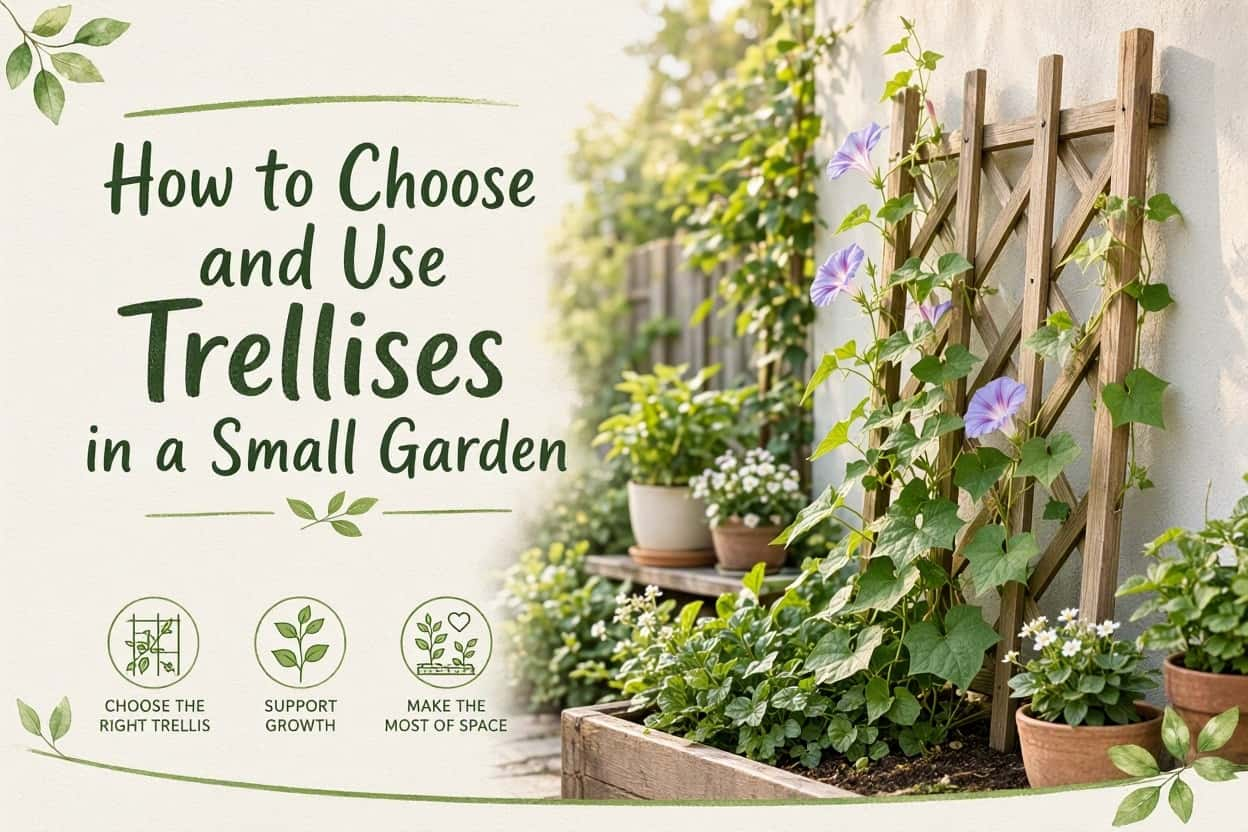
When growing space is limited, the ground is not the only place available for plants. A trellis can turn an empty wall, fence, or narrow planting strip into useful growing space. It allows climbing vegetables and certain ornamental plants to grow upward rather than spreading across the garden.
However, not every plant needs a trellis, and not every support structure is suitable for every crop. A lightweight frame may work for climbing beans but fail under the weight of mature cucumbers or heavy fruiting vines.
Choosing the right support before planting makes the entire growing process easier.
Which Plants Benefit From a Trellis?
Some plants climb naturally by wrapping tendrils or stems around nearby supports. Others need their stems tied or guided as they grow.
Climbing beans are among the easiest vegetables to train vertically. Their tendrils attach readily to suitable netting, string, or narrow poles.
Cucumbers can also be grown on trellises, particularly climbing varieties. Supporting the vines improves airflow and makes fruit easier to locate and harvest.
Peas use tendrils to grip nearby structures and generally need relatively fine supports.
Indeterminate tomatoes benefit from stakes, cages, or string systems, although these plants usually need their stems tied rather than climbing independently.
Squash and melons require more careful planning because their vines and fruit can become heavy. Small-fruited varieties are generally easier to support vertically.
Choose a Trellis Based on Plant Weight
A common mistake is buying a support based only on its appearance.
Consider the mature plant, including its foliage, fruit, and the additional weight it may carry after rain.
Lightweight netting: Suitable for peas and many climbing beans. It is inexpensive and can be attached to a frame or fence.
Bamboo poles: Useful for beans and other relatively light climbing plants. Several poles can be arranged into a tripod or teepee structure.
Wire panels: Strong and versatile. They can support heavier vines when securely installed.
Wooden lattice: Attractive for ornamental climbers and some vegetables, although the openings and strength should suit the plant.
Tomato cages: Convenient for compact tomato varieties and certain peppers, but not every cage is strong enough for a large indeterminate tomato plant.
For outdoor use, choose materials that can withstand moisture and wind.
Think About Sunlight Before Installing the Structure
A tall trellis can cast a surprisingly large shadow. If it is positioned poorly, it may reduce the amount of sunlight reaching neighboring plants.
Observe how the sun moves across the growing area before deciding where to install the support.
In many northern-hemisphere gardens, placing a tall structure along the northern side of a planting area can reduce shading of shorter crops. In the southern hemisphere, the opposite may be more appropriate.
Local conditions, surrounding buildings, and the season all influence the best position.
Allow enough space for the mature vines to spread without blocking windows, walkways, or access to other containers.
Install the Trellis Before the Plant Needs It
A support is easier to install before roots become established and vines begin spreading.
For a ground-grown trellis, push the posts or stakes deeply enough to remain stable under expected loads. In windy areas, additional anchoring may be necessary.
A container-grown plant needs a different approach. The support should be firmly secured to the container or another stable structure rather than simply resting loosely in the potting mix.
Remember that a mature plant can act like a sail in strong wind. A tall, leafy trellis attached to a lightweight planter may tip over even when the structure itself is strong.
Train Vines Without Damaging Them
Young vines are easier to guide than older stems.
For plants with tendrils, position the growing tips near the support and allow them to attach naturally. Check regularly to make sure they are not becoming tangled around neighboring plants.
For tomatoes and other plants that require tying, use soft garden ties or strips of suitable material. Secure the stem loosely, leaving room for it to thicken.
Never pull a growing stem tightly against a wire or narrow support. Pressure can damage plant tissue as the stem expands.
Check ties periodically throughout the growing season.
What About Heavy Fruits?
Some climbing plants produce fruit that becomes too heavy for a thin support system.
Large cucumbers, squash, and melons may need additional support, particularly when grown vertically.
A breathable fabric sling or mesh support can hold developing fruit and distribute its weight more evenly. Attach the sling securely to the trellis rather than relying on the vine itself to carry the entire load.
Use this technique only when the plant and fruit size make it appropriate. Small fruits often need no additional support.
Keep Airflow and Maintenance in Mind
Vertical growth does not automatically prevent disease. Dense foliage can still trap moisture, especially when plants are grown too close together.
Remove damaged leaves when necessary and avoid allowing vines to form an excessively crowded mass.
Check supports after storms and inspect the base of the structure for loosened fixings. Replace broken ties before they allow stems to fall or become damaged.
At the end of the growing season, remove dead vines and clean reusable structures before storage. If plants showed signs of serious disease, clean and disinfect equipment using a suitable method before reusing it.
Make Vertical Space Work for You
A well-planned trellis can increase growing capacity without expanding the garden’s footprint. It can also make harvesting easier and keep climbing vegetables away from damp soil.
Start with a crop suited to your available structure, install the support securely, and guide the plant as it grows. A simple, sturdy frame that matches the plant’s needs is far more useful than an elaborate design that cannot handle the weight of a mature vine.