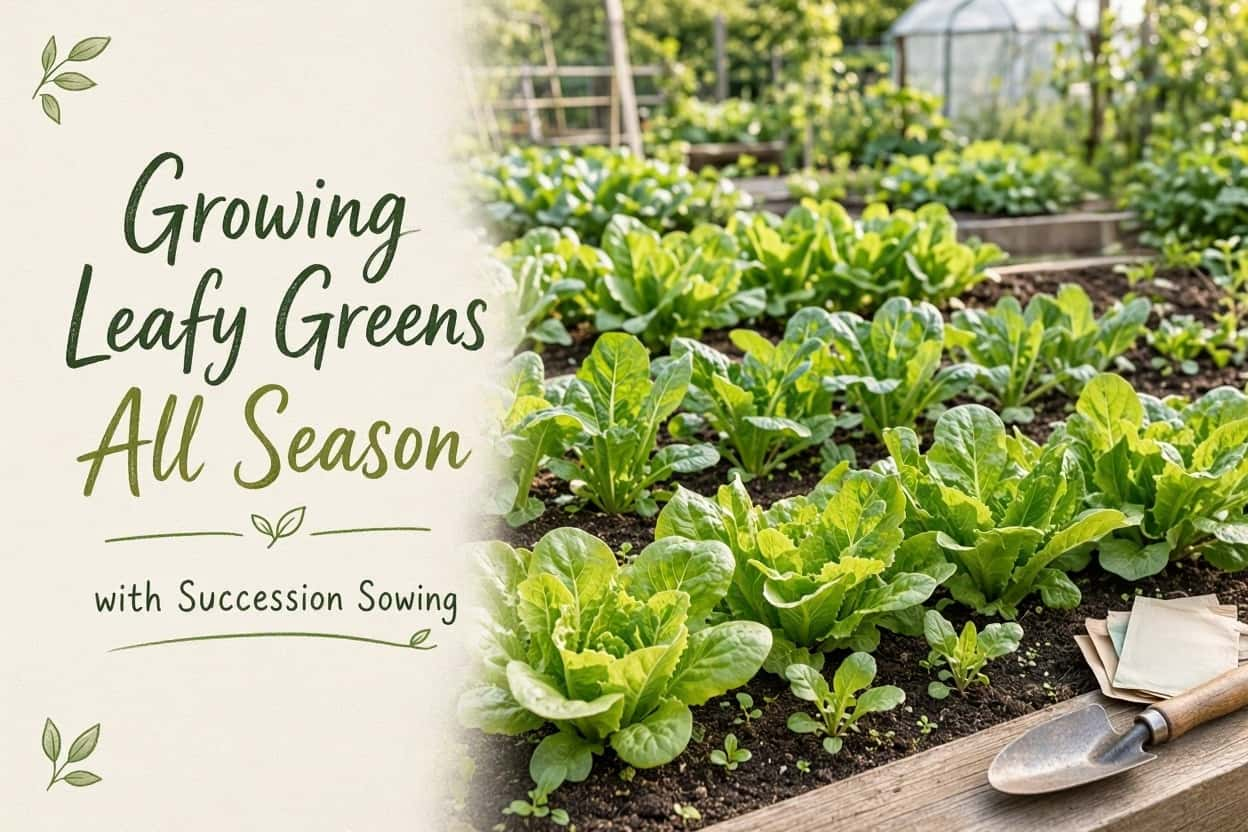
Leafy greens are among the most rewarding crops to grow at home, but they can also be surprisingly easy to waste. A row of lettuce may look small when the seeds first emerge, yet several weeks later the plants can mature almost simultaneously. Suddenly there is more salad than the household can eat, and some leaves begin to turn bitter or deteriorate before they can be harvested.
Succession sowing offers a practical solution. Instead of planting an entire packet of seeds at once, you sow smaller quantities at regular intervals. This spreads the harvest over a longer period and makes better use of limited growing space.
Start with crops that mature at different speeds
Not all leafy vegetables grow at the same rate. Loose-leaf lettuce varieties can often be harvested relatively early, while larger heading lettuces need more time to develop. Arugula, mustard greens and baby spinach are also useful choices when you want a quick supply of leaves.
A mixed planting can provide variety, but it is worth checking the expected maturity time on each seed packet. If one crop is ready in three or four weeks and another needs considerably longer, sowing them together does not necessarily produce a balanced harvest.
For a simple home setup, choose two or three crops that suit your climate and eating habits. There is little benefit in growing a large range of greens if some are rarely used in the kitchen.
Plan small sowings rather than large batches
A useful starting point is to sow a small amount every two or three weeks during the suitable growing season. The interval does not need to be exact. Fast-growing crops may benefit from more frequent sowings, while slower varieties can be planted less often.
For example, you could sow a short row of loose-leaf lettuce this week, another row in two weeks, and a third row after that. When the first planting is ready for harvesting, the next one should be developing.
The amount you sow matters more than the size of the planting area. A few short rows or a small section of a raised bed may provide enough leaves for regular meals. If you are unsure how much your household will use, begin with a smaller quantity and adjust after observing the harvest.
Keep a simple record of sowing dates and harvest results. It helps you identify which intervals work best in your local conditions.
Give seedlings enough room
Crowded seedlings compete for light, water and nutrients. Their leaves may remain small, and poor air circulation can encourage disease. Once seedlings have developed their first true leaves, thin them according to the spacing recommended for the variety.
You do not always need to remove every extra seedling immediately. Some crops can be harvested young as baby leaves, allowing you to thin the planting gradually. This is particularly useful with lettuce and mustard greens.
When growing in containers, avoid scattering too many seeds across a small pot. A wide, shallow container can work well for baby-leaf production, but it still needs adequate drainage and enough depth for the roots to develop.
Harvest in a way that encourages continued growth
Many loose-leaf greens can be harvested gradually rather than pulled out as soon as the first leaves are ready. Pick the outer leaves and leave the central growing point intact. The plant can then continue producing new foliage.
Use clean scissors or harvest with your fingers, taking care not to damage the crown. Avoid removing too much foliage at once. A plant needs enough healthy leaves to keep growing, particularly during warm or dry weather.
This cut-and-come-again approach is useful, but it does not make a plant productive forever. As it ages, growth may slow, leaves can become tougher, and some varieties may begin to flower. Keep the next sowing coming so that older plants can be replaced naturally.
Watch temperature and daylight
Leafy greens do not all respond to heat in the same way. Lettuce and spinach can become stressed during hot weather, sometimes producing bitter leaves or sending up flower stalks prematurely. Arugula and mustard greens may also become stronger in flavor as temperatures rise.
In warm conditions, choose heat-tolerant varieties where available. Provide afternoon shade if intense sun is causing stress, and keep the root zone evenly moist without leaving the soil waterlogged.
In cooler seasons, growth is usually slower. You may need to increase the interval between sowings or accept a longer wait before harvesting. Shorter daylight hours can also affect growth, so do not assume that the same schedule will work throughout the year.
Avoid sowing into exhausted soil
Repeatedly growing crops in the same container or bed can gradually reduce the availability of nutrients. Before starting a new batch, remove old roots and plant debris, loosen the surface gently, and incorporate a suitable amount of mature compost or fresh growing medium where appropriate.
Do not add large amounts of fertilizer simply because a crop has been harvested. Excess nutrients can encourage soft, leafy growth and may affect flavor. Follow the product directions and consider the condition of the soil before feeding.
Make the schedule flexible
Succession sowing is not a rigid timetable. Heavy rain, heat waves, poor germination and unexpected pest damage can all affect the timing. If a batch fails, sow another small amount rather than trying to replace everything at once.
The most useful schedule is one based on actual harvests. If you regularly have more lettuce than you can eat, increase the interval between sowings. If there is a gap with no usable leaves, shorten it slightly.
With a few small plantings, a simple record and attention to local weather, leafy greens can become a reliable part of a home garden rather than a crop that arrives all at once.